Before opening a cell, we sometimes invent its justification: this area looks empty, that side already had so much danger, surely this one cannot be dangerous too.
Those thoughts might accompany a lucky click. They might only be hope. A valuable habit in Minesweeper-style games is separating that hope from the clues already established.
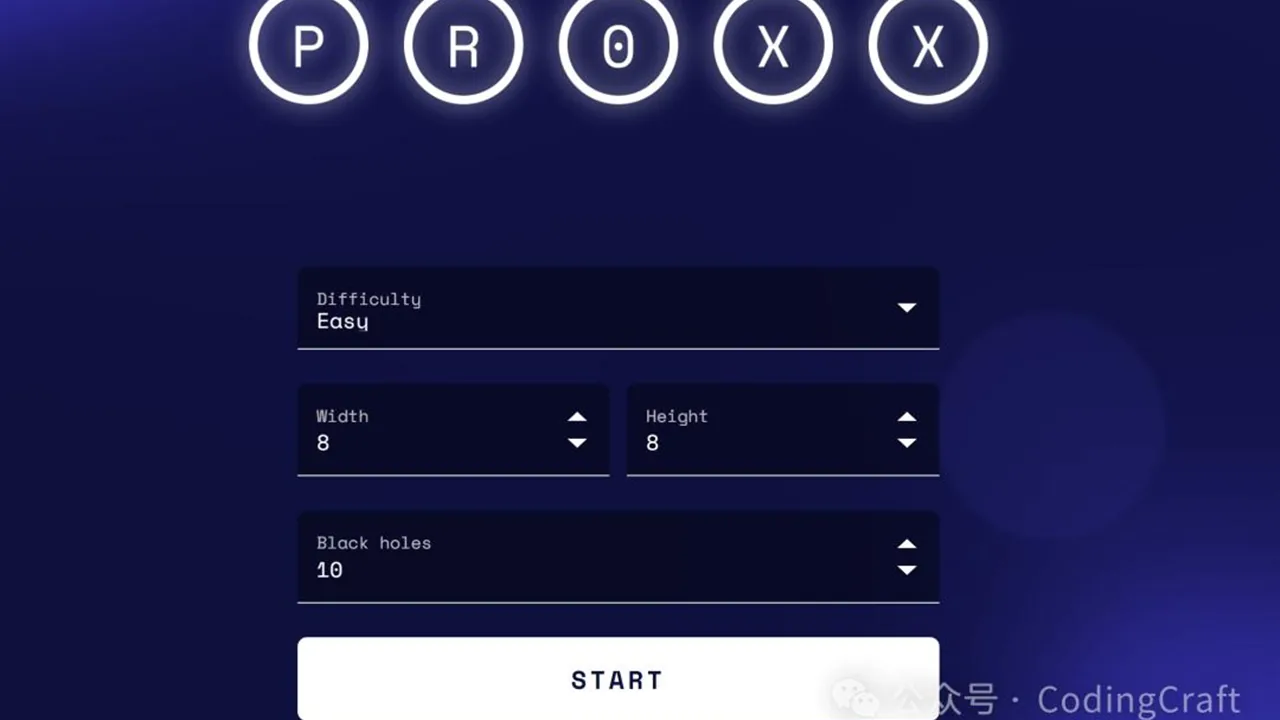
PROXX was developed by Google Chrome Labs around neighboring-cell constraints. The site's entry links to the project. Check the game's own instructions for reveal and flag controls on your device. Developer project
A number describes its neighbors
A Minesweeper-style number counts dangers among its neighboring cells. Distinguish revealed safe cells, unresolved cells, and flags supported by actual reasoning.
Count which unknown cells a clue can still refer to. Do not include every cell that looks roughly nearby. Before tapping, confirm whether you are revealing or marking.
If a clue has only one unknown neighbor and still needs one danger, that cell is determined. Conversely, once all required dangers are reliably established, the remaining unknown neighbors are safe.
“Reliably established” matters. A flag records your judgment; placing one does not turn a guess into fact.
Put two clues together
Let A, B, and C represent unknown cells. This is an independently designed abstract exercise, not a screenshot or a solution to a particular game. Danger is 1; safe is 0.
First constraint: exactly one of A and B is dangerous.
Second constraint: exactly two of A, B, and C are dangerous.
The second set adds only C, and its danger count adds one. Therefore C is dangerous. Which of A and B is dangerous remains unresolved.
The possibilities are A dangerous/B safe/C dangerous, or A safe/B dangerous/C dangerous. C agrees across both; A and B do not. That is the limit of the deduction. One correct deduction does not solve the whole region.
Change one condition
Keep the first constraint, but make the second say exactly one of A, B, and C is dangerous. Now C must be safe: A and B already account for the required danger.
One changed count reverses the conclusion for the extra cell. Remember the constraints, not “last time I clicked the right-hand square.”
The original article verified both exercises by enumerating all binary combinations of the three cells. That checks the small deductions, not a complete game or a guarantee that every real board is guess-free.
Check what you subtracted
If a clue requires three dangers and two are confirmed, the remaining unknown region needs one. Subtract confirmed dangers, not every convenient flag.
You can also test assumptions: would making this cell safe leave a neighboring clue impossible? Would making it dangerous exceed another count? If both remain possible, there is insufficient evidence to choose.
Recognizing uncertainty is part of playing carefully. It prevents a lucky result from becoming an imagined winning formula.
Practice recording a reason
For each flag, explain how many unknown neighbors the clue has and how many dangers remain. If you cannot finish that explanation, treat the flag as unresolved rather than building further reasoning on it.
After revealing new information, compare old and new clues for overlapping sets, as with A/B and A/B/C. Explain one small region before scanning the entire board.
This article focuses on logic. It has not individually verified first-click protection, quick reveal, or flag gestures in the current live version. Confirm controls before a tap that could end the round, especially on a different screen or touch interface.
If you must make an uncertain choice, record it honestly. The next game can then begin with a clear distinction: which cells you deduced, and which merely happened to favor you.