When Zhao Qing received the key, the administrator explained: two turns, and lift the door on the second.
She put it in her phone. The school had many such instructions: tap the printer's right side; switch off hot water before restarting the dispenser; never open the south building's third window in rain. None appeared in a handover document. Someone remembered just before something happened.
The clock-tower door did stick. As she lifted it for the second turn, the key bent at an alarming angle. The old man behind her supported one edge. The door opened.
“This side next time,” he said.
His surname was Fu. His canvas tool bag had a broken zipper tied shut with shoelaces. She had expected a large kit; it was barely larger than a student's backpack.
The clock occupied the top floor. Only one person could use the narrow wooden stairs at a time. She started up, then heard him stop below to untie the bag.
“Watch your feet. Don't turn around.”
She withdrew the hand she had been about to offer.
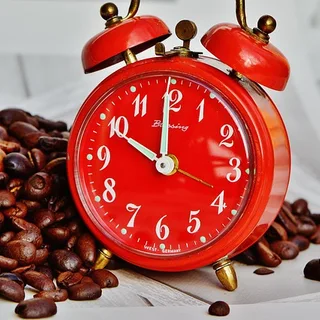
The clock was eleven minutes slow—usually. Sometimes it stopped longer. Class bells used another system and rang on time. Students crossed the playground, glanced up, then checked their watches, as though deciding which adult to believe.
A part replaced last month had helped for two days. The previous repairer recommended replacing everything. After hearing the cost, the principal decided to try one more person.
Fu sat behind the mechanism and laid out his tools. Last came a biscuit tin of small parts separated by labeled paper.
Zhao Qing asked him to look up for a maintenance photograph.
“In a moment.” He did not look up.
She put the phone away and sat by the window. Runners passed the flagpole below while another group spilled out of a building and dispersed.
“Did you go to school here?” he asked suddenly.
“No. I've just started.”
“I'd just started when I installed this clock.”
She waited, but he bent over the mechanism again, as if he had only asked whether she was cold.
At ten-thirty he sent her for the inspection book. Its first page recorded electrical work more than a decade earlier. Handwriting changed over the years: dates alone, “normal,” months of blank space. The latest repairer's entry said “Replacement recommended.”
A boy with a basketball waited outside the stairs.
“Are they fixing it?”
“Yes. You can't go up.”
He shifted the ball. “Could you ask him not to make it too fast?”
She did not understand. “It can't stay eleven minutes slow.”
“I know. But if it's faster, I'll still be late.”
He said it flatly, without the sound of an excuse. She recognized a first-year student named Chen, though not his full name. The gatekeeper had mentioned his last-minute arrivals twice last week.
“Go to class,” she said.
He nodded, switched the ball back, and left.
Fu had not heard. After searching the tin, he put a part back and stood.
“Not today?” she asked.
“Need another part. Leave the power off.”
She recorded that and posted a note on the door.
He did not return that afternoon. When the office asked, she said they must wait. A sigh: he was the last person they would call before replacement.
Next morning his bag appeared outside her office. He held two steamed buns, one half eaten.
“Missed the earlier bus.”
She remembered the boy. His name, she had checked, was Chen Xu. His teacher said he lived far away and took his sister to another school first. “The family is trying to arrange something. It isn't that nobody cares.”
Zhao Qing had not known what to add. She asked whether the explanation could be recorded, so every late arrival did not leave only the word “late.”
Fu finished his bun, folded the wrapper into his bag, and followed her upstairs.
The light behind the clock was brighter than yesterday. He unfolded a numbered scrap with half a calculation on its reverse.
“Your grandson's?” she asked.
“Mine. Working something out.”
She stopped guessing.
At noon the hands moved. From the playground, she compared them with her phone. Fu pushed the upstairs window open a crack and looked down.
“Right!” She waved. When he could not hear, she raised both thumbs.
After lunch, Chen Xu paused by the tower. No basketball; this time he held a sheet of paper.
“Fixed?”
“Running for now. We need to watch it.”
“I didn't really want it broken, Miss.”
“I know.”
“I'd just been late again that day.”
This time she did not immediately send him away. His teacher had recorded the circumstances, she explained; arrangements still needed discussion with his family. She did not promise an end to lateness or assign its solution to the clock.
He unfolded a basketball tournament form. “Did I write Xu right?”
She indicated a stroke. He corrected it against his knee, poking a tiny hole through the paper.
Fu came down as she returned the form.
“Waiting to see the clock?”
“Yes.”
“Look again tomorrow. Running today doesn't mean completely fixed.”
He packed his tools and wrote several lines under “Work completed.” At the date, he paused to ask what day it was. He signed “Fu Zheng” and offered her the pen.
“Compare it once a day. Record how fast or slow. Don't just write normal.”
Only one line remained. Earlier pages were blank; this page was full of judgments.
“No room.”
“Turn the page.”
She did. She wrote the date and “Matches phone time; continue observing,” checked the clock again, and signed.
As Fu left, the boy held the door. The old man lifted the sticking edge anyway. On the second turn, the key moved smoothly.
Next morning a message arrived: “Still running?”
Zhao Qing was crossing the playground. The minute hand moved one notch. She stopped, entered the time in the book, and replied, “Running.”